ICRA 2018 Workshop On Criteria, Metrics and Experiments for Design, Selection and Comparison.

ICRA 2018 Workshop
On Criteria, Metrics and Experiments for Design, Selection and Comparison.
Malzahn, Jörn Istituto Italiano di Tecnologia
Kashiri, Navvab Istituto Italiano di Tecnologia
Oh, Sehoon Daegu Gyeongbuk Institute of Science and Technology
Tsagarakis, Nikos Istituto Italiano di Tecnologia
Wensing, Patrick University of Notre Dame

IROS 2017 Workshop On the Energetic Economy of Robotics and Biological Systems: A Challenging Handicap to Overcome

IROS 2017 Workshop
On the Energetic Economy of Robotics and Biological Systems: A Challenging Handicap to Overcome
Kashiri, Navvab Istituto Italiano di Tecnologia
Vanderborght, Bram Vrije Univ. Brussel
Malzahn, Jörn Istituto Italiano di Tecnologia
Daley, Monica Royal Veterinary Coll. Structure and Motion Lab.
Tsagarakis, Nikos Istituto Italiano di Tecnologia

“CanWe Build Baymax? Part 3. Design and Control for Soft Human-Robot Interaction” IEEE-RAS International Conference on Humanoid Robots (Humanoids) 2017, with Drs. Katsu Yamane (Disney Research Pittsburgh, USA) Hiroshi Kaminaga (AIST, Japan) and Joohyung K

Humanoids'16 WS on " Can We Build Baymax? Part 2: Making Hard Robots Soft Sensors, Skin and Airbags"

Organizers

Link: http://www.cs.cmu.edu/~cga/humanoids16workshop/

Link: http://www.cs.cmu.edu/~cga/humanoids16workshop/

Abstract

This will be the 2nd workshop entitled “Can we build Baymax?”. The 1st workshop was held at Humanoids 2015 in Korea. Baymax is the soft humanoid character in Disney's feature animation "Big Hero 6." It is a healthcare robot with an inflatable body, capable of walking, bumping into surrounding objects and physically interacting with people. However, in the real world, it is not an easy robot to build. For the realization of this robot, awareness of the environment, especially a sense of touch and vision, is very important. Covering robots with soft material to protect both humans and the robot is also required. Integrating these features into actual hardware using reasonable fabrication methods is a challenging task. In this workshop, we will discuss topics related to building robots like Baymax with special features including but not limited to implementation of skin sensors, methods to protect humans and robots, and fabrication of soft skin for humanoids.


IROS'16 WS on "The Mechatronics behind Force/Torque Controlled Robot Actuation: Secrets & Challenges"

Organizers:

  • Jörn Malzahn (IIT)
  • Sangbae Kim (MIT)
  • Nicholas Paine (Univ. of Texas at Austin)
  • Nikos Tsagarakis (IIT)

ICRA'16 WS on "Legged Robot Falling: Fall Detection, Damage Prevention, and Recovery Actions"

Objectives and Motivation
Research on legged robots has focused mainly on reliable perception, planning, and control methods for completing challenging tasks. The DARPA Robotics Challenge 2015 showed that when the tether is removed, legged robots may inevitable fall over during a task in an unstructured environment; either when they walk on a flat or rough terrain, or when they are cutting a wall with a drill, opening a door, and turning a valve. In a lot of cases if a legged robot falls over, it may end up with a serious damage. If not, the robot in a real world scenario should stand up and complete the task. Being able to detect such a fall, apply the appropriate actions to prevent a big damage both on the robot and the environment around it, and recover if possible, are necessary for a real world application, where legged robots will need to deal with even rougher terrain and more complicated manipulation tasks under significant uncertainty either for static or dynamically changing environments.
This workshop will provide a platform for researchers from all areas in robotics to disseminate and exchange ideas, evaluating their advantages and drawbacks. This will include from the mechanical design and biomechanics to the perception, planning, and whole-body control methods on real robot and simulations for fall detection, damage prevention, and recovery actions in a falling over scenario. The aim is to foster collaboration among researchers that are working on legged robots to advance the very limited state of the art work in this area.
We propose a half-day workshop consisting of a mixture of presentations on topics including design, sensing, perception, planning, biomechanics, and motion generation for various types of legged robots designed to work indoors and outdoors. To stimulate interaction, we will also organize a poster/video session to encourage the participation of young researchers and promote the discussion with the speakers and the audience. Moreover we will allocate adequate time for questions and discussion to make the workshop as interactive as possible.
Workshops as the IROS’15 “The Path to Success: Failures in Real Robots”, the Humanoids “Workshop on Humanoid Soccer Robots”, and the ICRA’15 “Dynamic Locomotion and Balancing of Humanoids: State of the Art and Challenges” were focused more on analyzing the cause of a fall, the fall recovery for toy-robots, and balancing correspondingly. The proposed workshop will focus on the action to follow an inevitable fall after it has been detected. Given that the DRC this year focused on legged locomotion and a large number of falls took place, we believe that such a workshop will attract a large number of participants and promote interaction and collaboration.

Topics of Interest:

  • mechanical design for a falling scenario and soft robotics
  • robotic simulation for falling
  • exteroceptive and proprioceptive perception for fall detection
  • fall planning and recovery
  • damage prevention control
  • collision avoidance and self-collision avoidance
  • reactive behaviors and emergency behaviors
  • biomechanical analysis of human fall detection
  • whole-body control fall/recovery strategies

Support of an IEEE RAS Technical Committee
This proposed workshop is supported by:
1) IEEE RAS Technical Committee on Humanoids Robotics as confirmed as confirmed by the Technical Committee co-chairs Aude Billard, Eiichi Yoshida, and James Kuffner.
2) IEEE RAS Technical Committee on Algorithms for Planning and Control of Robot Motion as confirmed by the Technical Committee co-chairs Fabrizio Flacco, Sertac Karaman, Hanna Kurniawati, and Lydia Tapia.
3) IEEE RAS Technical Committee on Whole-Body Control as confirmed by the Tehnical Committee co-chairs Federico Moro, Luis Sentis, and Jaeheung Park.

Acknowledgement
This work is supported by the FP7-ICT-2013-10 WALK- MAN European Commission project.

Special thanks to Ambarish Goswami for his priceless help.

ICRA'16 WS on "Human-Robot Interfaces for Enhanced Physical Interactions"

Organizers:
Arash Ajoudani, Istituto Italiano di Tecnologia (IIT), Italy
Barkan Ugurlu, Ozyegin University, Turkey
Panagiotis Artemiadis, Arizona State University, USA
Jun Morimoto, ATR Computational Neuroscience Laboratories, Japan

Workshop Overview

Soft robotics design, either due to the hardware or control, has led to the emergence of several promising applications in which humans come in contact or coexist with robots or assistive devices to achieve a certain task in unstructured environments. In such applications, the establishment of a suitable level of shared autonomy between the robot and the user has shown to be a key factor to demonstrate versatile and stable human-robot-environment interactions. This, however, requires that the robot functionalities are appropriately associated with the human motor behavior and intention. Indeed, this workshop aims at discussing the pertinence and the feasibility of the establishment of human-robot interfaces to enhance the robot or assistive device’s physical interaction performance. This goal will be achieved by - bringing together researchers working on the relevant fields and tackling challenges that lay ahead for achieving an intuitive, safe, and stable human-robot interface, and - evaluating the underlying concepts and tools while targeting real-world applications such as rehabilitation robotics, human-robot cooperation, teleoperation, etc. It is as well expected to encourage synergistic collaborations among researchers working on different areas of human-robot interfaces and physical interaction to extend views toward required key technologies, in terms of hardware or software, as a take-home message.

Scope and Topics

- Human-in-the-loop Control of Robotic Systems

- Active Exoskeletons and Assistive Devices for Rehabilitation and Power Augmentation

- Co-operative and Collaborative Human-Machine Systems for Manufacturing

- Characterization of Variable Impedance to Enhance Human-Robot Interaction

-Learning Human Sensorimotor Control for Advanced Human-to-Robot Skill Transfer

- Mutual Learning and Adaptation in Human-Robot Systems

- Stability and Robustness of Human-Robot Interfaces

- Objective Measures: How to Quantify Efficacy, Safety and Intuitiveness in Human-Robot Interaction?

- Novel Sensors and Actuators for Advanced Human-Robot Interaction Control

- Case Studies, Experiments, Ethics and Outreach


Speakers http://robotics.ozyegin.edu.tr/icra16workshop/speakers/

Organizers http://robotics.ozyegin.edu.tr/icra16workshop/organizers/

IEEE-RAS Technical Committee support http://robotics.ozyegin.edu.tr/icra16workshop/support-letters/

Humanoids'15 WS on "Can we build Baymax?: Soft Robotics and Safe Human-Robot Interaction in Humanoids"

Organizers

  • Kim Joohyung (Disney Research)
  • Yamane Katsu (Disney Research)
  • Atkeson Christopher (CMU)
  • Park Yong-Lae (CMU)
  • Tsagarakis Nikos (IIT)

Humanoids15 WS on Proprioceptive and Exteroceptive Data Fusion for State Estimation and Whole-Body Control of Humanoid Robots


Organizers:

Federico L. Moro, Consiglio Nazionale delle Ricerche (CNR), Italy

Dimitrios Kanoulas, Istituto Italiano di Tecnologia (IIT), Italy

Jaeheung Park, Seoul National University (SNU), South Korea

Luis Sentis, University of Texas at Austin, USA


Abstract:

Humanoid robots need to reliably locomote and manipulate continuously in very uncertain environments.  For completing challenging tasks, sensor data need to be used for estimating the robot’s own state with respect to the environment.  Simultaneous localization and mapping (SLAM) has been studied a lot over the last few years but still there is not a commonly accepted solution to the problem, especially since different tasks may require different estimation accuracy.  From one side, exteroception, like the visual perception, has been used to build either sparse or dense maps of the environment, localizing continuously the robot in it, but with potentially big errors and drifts over time.  From the other side, proprioception, like the robot kinematics, could provide a more accurate state estimation of the joints but under some assumptions, for instance that the robot maintains either non-slipping or static contacts with the environment.  Sensor data fusion is required for a more accurate and continuous state estimation, in order to allow a reliable whole-body control.  The problem becomes even more challenging when the sensors not only provide uncertain measurements but also provide them in an non-continuous base.

This workshop will provide a platform for researchers working on SLAM from the proprioception and/or exteroception point of view, to exchange ideas on sensor data fusion methods for a better state estimation.  The aim is to foster collaboration among researchers that are working on SLAM and sensor fusion, either they work on the control, the planning, or the perception side of the problem, to advance the state of the art in robot locomotion and manipulation in challenging and uncertain environments.  We propose a full day workshop consisting of a mixture of presentations on topics including SLAM, sensing, and data fusion with the goal of applying them to humanoids. Moreover we will allocate adequate time for questions and discussion to make the workshop as interactive as possible.


Keywords: data fusion; state estimation; whole-body control; integration of perception and control.


Program:

Session 1
10:00 - 10:05 Welcome
10:05 - 10:35 Nikolaus Vahrenkamp, Mikro Wächter, Tamim Asfour, Karlsruhe Institute of Technology, Germany
10:40 - 11:10 Siyuan Feng, Chris Atkeson, Carnegie Mellon University, USA
11:15 - 11:45 Coffee Break
Session 2
11:45 - 12:15 Dimitrios Kanoulas, IIT, Italy
12:20 - 12:50 Marilena Vendittelli, Università di Roma “La Sapienza”, Italy
12:55 - 13:30 Lunch Break
Session 3
13:30 - 14:00 Ludovic Righetti, Max Planck Institute, Germany
14:05 - 14:35 Luis Sentis, University of Texas at Austin, USA
14:40 - 15:10 Jaeheung Park, Seoul National University, South Korea
15:15 - 16:15 Discussion
16:15 - 16:20 Closing Remarks


List of speakers:

1. Nikolaus Vahrenkamp, Mikro Wächter, Tamim Asfour
Title: "Memory-based robot architectures for whole-body motion control"
Abstract:
Providing a consistent internal representation of the robot's state together with the perceived environment is an essential feature for component-based robot software frameworks.  In order to provide such representations, a robot software architecture should offer consistent memory concepts for storing and fusing a wide variety of sensor data, ranging from low level sensor readings to inferred entities on symbolic level. Based on this representation, the robot's high-level control system is able to operate on seamless data while being decoupled from sensor data processing.  We present our component-based robot software framework ArmarX, which has been developed to inherently support memory-based robot software architectures. ArmarX provides two memory structures:  a persistent memory which  supports long-term memory and data storage of prior knowledge and a  robot's working memory  as central component for representing the robot's current state and for building a representation of the world by continuous fusion of all sensor modalities. Here, probabilistic concepts are used to ensure that information about the certainty of perceived entities are available in the temporal and the spatial domain. Based on these memories, robot skills are developed and encoded as event-driven and reusable statecharts.
In this talk, we will show how motion control skills can be realized by incorporating memory structures. This include visual servoing based grasping and  pick&place tasks. The execution in the ArmarX simulation environment will be presented with an  evaluation as well as discussion of its  limitations. Further, we will present ongoing work on ControlX, the low level controller in of ArmarX, which aims at reducing the effort in porting control strategies.
 
2. Siyuan Feng, Chris Atkeson:
Title: "Controller and State Estimator Design and Implementation for the Atlas Robot"
Abstract:
In this talk, I will present the controller and state estimator we have implemented on the Atlas robot. For the first half of the talk, I will present an overview of the system in the context of the DARPA Robotics Challenge. For the second half, I will focus on our recent work on dynamic walking and improvements in state estimation by incorporating multiple IMUs.
Bio:
Siyuan Feng is a Phd student at the Robotics Institute at Carnegie Mellon University. He received a M.S. degree in Robotics and a B.S degree in Computer Science from Carnegie Mellon University in 2014 and 2010. 
 
3. Dimitrios Kanoulas
Title: "Towards Rough Terrain Perception for Localization and Mapping"
Abstract:
One of the advantages of legged vs other forms of locomotion is the use of sparse foothold affordances, especially when dealing with rough outdoor environments. Recent advancements in robotics have enabled bipeds to walk mainly on flat surfaces, leaving the problem of unstructured rough (e.g. rocky) terrain locomotion open. We present a 3D perceptual system for identifying contact areas for bipedal locomotion in rough terrain, by modeling, localizing, and mapping sparse local surfaces using the concept of the 3D curved patches. Range and IMU sensing has been used to automatically find sparse patches of the size of the foot in the environment using a bio-inspired approach. This set of potentially good for contact patches could be refined later to actual contacts in a higher-level selection planning process. Using the robot’s kinematic chain we also introduce the concept of assembling these patches into a map, where patches locally approximate both the environment surfaces and key contact surfaces on a robot for reasoning contacts. Finally we will describe a way to integrate a dense volumetric range data fusion system to keep the detected patches mapped around the robot in real-time. We finally present a real-time experiment where a mini-biped robot (RPBP) is using the introduced algorithm for foot placement on rocks.
Bio
Dimitrios Kanoulas is a postdoctoral researcher at the Italian Institute of Technology (IIT) in Genoa, working in the field of perception for robotics and in particular on detecting foothold and handhold affordances in uncertain environments.  He was the perception team leader for the WALK-MAN DARPA Robotics Challenge 2015 team.  He graduated from Northeastern Univ. in Boston in 2014, advised by prof. Marsette Vona.
 
4. Marilena Vendittelli
Title: "Data fusion and sensing for humanoids locomotion and physical interaction"
Abstract:
This talk will present data fusion and sensing techniques applied to humanoid robots to achieve tasks implying locomotion and physical interaction. First, we will focus on the EKF-based integration of kinematic, inertial and visual information for odometric localization. Then, we will present a vision-based controller, with formal convergence property, for the navigation of humanoids in indoor environments made of networks of corridors connected through curves and junctions. 
Finally, we will report on recent results on force reconstruction in physical interaction of humanoids with humans or the environment. The presented sensing techniques are based on the perception of the equilibrium perturbation or on the measurements of joint positions and motor currents.
In illustrating the experimental results we will briefly discuss the challenges arising in the application of the developed methods to the small humanoid NAO.
Bio:
Marilena Vendittelli received the Ph.D. in Systems Engineering in 1997 from Sapienza University of Rome. She held a two years post-doc position at LAAS-CNRS in Toulouse (France) funded through a Marie Curie fellowship.
Since 1998 she is with the Department of Computer, Control, and Management Engineering of Sapienza University of Rome and she is a member of the Robotics Laboratory of the same department. From January 2010 to December 2013 she has been Associate Editor for the IEEE Transactions on Robotics.
 
5. Ludovic Righetti 
Title: "Momentum estimation and planning for legged robots."
Abstract:
Recently there have been a growing interest in optimization based inverse dynamics approaches for the control of legged robots. In particular, this framework has been successfully used to regulate the robot’s (linear+angular) momentum, which naturally relates interaction forces to robot motion, in order to create more stable and dynamic
behaviors. However, this approach is limited by at least two aspects. First, the planning over multiple contact sequences of the momentum as well as the control of the required interaction forces necessary to generate it is generally reduced to linear momentum planning (e.g. preview control with a LIPM model) where angular momentum is regulated to zero. While this approach works well on flat ground, it cannot generalize to more complicated contact scenarios or more dynamic motions
involving non-zero angular momentum. Second, there is still a large gap between simulation and real robot performance and one reason lies in the inaccurate estimation of important quantities that cannot be measured directly, such as the robot pose in space, its overall momentum and possible (time-varying) biases coming from noisy indirect sensor measurements, inaccurate nonlinear process models and external disturbances. An inaccurate and noisy estimation of these quantities severely limits the control bandwidth available on a real robot and therefore its performance. In this presentation, I will discuss our recent work addressing these two limitations. First, I will discuss our recent results on trajectory optimization for momentum during
multi-contact non-coplanar tasks. Then I will highlight our theoretical and experimental results on the estimation of legged robot’s pose and overall momentum through the fusion of force, inertial and position measurements. Finally I will show how these results together with our work on optimization-based inverse dynamics provide a consistent planning, control and estimation framework for generating whole-body
behaviors on real robots.
Bio:
Ludovic Righetti leads the Movement Generation and Control group at the Max-Planck Institute for Intelligent Systems (Tübingen, Germany) since September 2012 and holds a W2 Research Group Leader position since October 2014. Before, he was a postdoctoral fellow at the Computational Learning and Motor Control Lab (University of Southern California) between March 2009 and August 2012. He studied at the Ecole Polytechnique Fédérale de Lausanne where he received a diploma in Computer Science in 2004 and a Doctorate in Science in 2008. His doctoral thesis was awarded the 2010 Georges Giralt PhD Award given by the European Robotics Research Network (EURON) for the best robotics thesis in Europe. His research focuses on the generation and control of movements for autonomous robots, with a special emphasis on legged locomotion and manipulation.
 
6. Luis Sentis: TBD
 
7. Jaeheung Park:
Title: "Active sensing strategies for contact using constraints between the robot and environment"
Abstract:
When robots are operating in human complex environments, they often require to deal with contacts. The contact between the robot and environment inevitably introduces uncertainties because of the relatively less precise sensing technology for contact and the modeling error of the environment. Therefore, it is an important issue how to perform tasks in contact situations with uncertainties. In this talk, first, the basic concept of active sensing is explained through a simple example. Then, we demonstrate the use of the concept “see and touch” in peg-in-hole task and box-packing task using a dual-arm robot. In the peg-in-hole task, the peg and hole are located using a vision sensor, but the positions of the objects are not precise enough for peg-in-hole task once they are grasped by the robot-hands. Therefore, we use active motions to locate contact position or settle the robot into a desired state of the task. Finally, the active sensing strategy is applied to locate the contact position of the unknown object on the ground during walking. This can be especially effective when the lower-body occludes the vision sensors. The experimental result demonstrates its performance and possibility to other applications.
Bio:
Jaeheung Park is an associate professor at Seoul National University, Korea. He was the team leader for TEAM SNU for DRC Finals. He received the B.S. and M.S. degrees from Seoul National University, Korea, in 1995 and 1999, respectively, and the Ph.D. degree from Stanford University, U.S. in 2006. From 2006 to 2009, He was a Post-doctoral researcher and later a Research Associate at Stanford Artificial Intelligence Laboratory. From 2007 to 2008, he also worked part-time at Hansen Medical Inc., a medical robotics company in U.S. Since 2009, he has been a professor in the department of Transdisciplinary Studies at Seoul National University, Korea. His research interests lie in the areas of robot-environment interaction, contact force control, robust haptic teleoperation, multicontact control, whole-body dynamic control, biomechanics, and medical robotics.
 

Special Issue: Software Architectures for Humanoid Robotics, Frontiers in Robotics and AI, specialty of Humanoid Robotics

Organizers:

  • Lorenzo Natale
  • Tamim Asfour
  • Nikolaus Vahrenkamp

ERF15 WS on Benchmarking Bipedal Locomotion (in humanoid and exoskeleton/wearable robots)

Diego Torricelli, CSIC, Spain, This email address is being protected from spambots. You need JavaScript enabled to view it.

Katja Mombaur, University of Heidelberg, This email address is being protected from spambots. You need JavaScript enabled to view it.

Nikos Tsakarakis, IIT, Italy, This email address is being protected from spambots. You need JavaScript enabled to view it.

Jose L. Pons, CSIC, Spain, This email address is being protected from spambots. You need JavaScript enabled to view it.

Anne Bajart, European Commission

Fabio Bonsignorio, SSSA, Italy

IROS15 WS on Perception and Planning for Legged Robot Locomotion in Challenging Domains

Organizers

Dr. Dimitrios Kanoulas, Dr. Ioannis Havoutis, Prof. Maurice  Fallon, Dr. Eiichi Yoshida

Abstract:

Recent advancements in control and actuation allowed legged robots to locomote on very uneven and rough terrain, assuming that either the environment is mostly known or well structured, or proprioception is sufficient for achieving balance. In real-world unstructured environments these assumptions may not hold. Exteroceptive perception is crucial for detecting foothold and handhold affordances in the environment, and generating agile motions accordingly. One of the DARPA Robotics Challenge tasks this year is to locomote on flat, but uneven surfaces. In a real-world disaster scenario, legged robots will need to deal with even rougher terrain under significant uncertainty either for static or dynamically changing environments.

This workshop will provide a platform for researchers from perception and planning in legged robotics to disseminate and exchange ideas, evaluating their advantages and drawbacks. This will include methods for detecting footholds and handholds on uneven and rough surfaces for legged robots including bipeds and quadrupeds, often also using arms. The goal is to show various ways from sensing the environment to finding contacts and planning the body and limb trajectories for achieving agile and robust locomotion. The aim is to foster collaboration among researchers that are working on perception and planning for legged robots to advance the state of the art in robot locomotion.

This full day workshop consists of a mixture of presentations on topics including sensing, perception, planning, and motion generation for various types of legged robots designed to work indoors and outdoors. To stimulate interaction, we also organize a poster session to encourage the participation of young researchers and promote the discussion with the speakers and the audience. Moreover we allocate adequate time for questions and discussion to make the workshop as interactive as possible.


Topics of interest

•    sensing for 3D reconstruction and scene modeling
•    proprioceptive and exteroceptive sensing fusion under uncertainty
•    probabilistic approaches to planning under uncertainty
•    localization and mapping for traversability in static or dynamic environments
•    object detection, segmentation, and categorization for collision and obstacle avoidance
•    collision avoidance and self-collision avoidance
•    environment segmentation and classification
•    motion and path planning for high dimensional environments
•    visual learning for foot placement in rough terrain
•    feature extraction and semantic scene understanding and categorization
•    locomotion and non-gaited locomotion planning
•    contact planning and optimization
•    reactive behaviors and emergency behaviors
•    perception and planning benchmarks

Invited Speakers

1. Oussama Khatib, Shuyun Chung — Stanford University, USA.
2. Maurice Fallon — University of Edinburgh, UK.
3. Jonas Buchli — ETH, Switzerland.
4. Sven Behnke — University of Bonn, Germany.
5. Nicolas Mansard, Olivier Stasse — LAAS-CNRS, France.
6. Dimitrios Kanoulas — IIT, Italy.
7. Maren Bennewitz, Philipp Karkowski — University of Bonn, Germany.
8. Ioannis Havoutis — IIT, Italy.
9. Katie Byl — University of California, Santa Barbara (UCSB), USA.
10. Katja Mombaur — Heidelberg University, Germany.
11. Oskar von Stryk, A. Stumpf, S. Kohlbrecher — TU Darmstadt, Germany.
12. Marco Hutter — ETH Zurich, Switzerland.

Support
This proposed workshop is supported by:

  1. The IEEE RAS Technical Committee on Algorithms for Planning and Control of Robot Motion as confirmed by the Technical Committee co-chairs: Ron Alterovitz, Kostas Bekris, Juan Cortes, and Hanna Kurniawati
  2. The IEEE RAS Technical Committee on Humanoids Robotics as confirmed by the Technical Committee co-chairs: Aude Billard, Eiichi Yoshida, and James Kuffner
  3. The IEEE RAS Technical Committee on Robotics and Automation in Nuclear Facilities as confirmed by the Technical Committee co-chairs: Yoshihiko Nakamura, William Hamel, Raja Chatila, and Hajime Asama.

Acknowledgement
This work is supported by the FP7-ICT-2013-10 WALK- MAN European Commission project.

Web-Page

https://iros2015wsperceptionandplanning.wordpress.com

ICRA15 WS on Dynamic Locomotion and Balancing of Humanoids: State of the Art and Challenges

Zhibin Li
Department of Advanced Robotics at the Istituto Italiano di Tecnologia (IIT)
zhibin.li(at)iit.it

Katja Mombaur
Interdisciplinary Center for Scientific Computing at Heidelberg University
katja.mombaur(at)iwr.uni-heidelberg.de

Tomomichi Sugihara
Department of Adaptive Machine Systems at Osaka University
zhidao(at)ieee.org

This workshop is organized to serve three goals with respect to humanoid locomotion and balancing. The first goal is to bring together the researchers working on humanoid locomotion and balancing to present and discuss the recent advancement of their recent work. A lot of novel advancements are, for example, expected to be made and demonstrated by the groups from European projects and teams participating in DRC. The timing of this workshop is perfectly aligned with the DRC finals, thus provides a good opportunity to present the very recent developments in the area of humanoid locomotion in more realistic conditions.  

The second goal is to introduce the up-to-date findings from biomechanical studies of human movement in order to understand better the biological motor control skills, and most interestingly, to propose mathematical models of human locomotion. This will provide insights for developing new control algorithms for controlling and optimizing the walking of humanoids more effectively.

The third goal is to inspire the integration of control principles and algorithms developed in actively powered humanoids and the passive dynamic walkers, and therefore, to bridge the gap between these two research paradigms. It is to be foreseen that collaboration among researchers from these two paradigms will emerge and the complementary advantages of these two control methodologies will eventually be adopted and integrated to create a more robust and efficient dynamic locomotion for humanoid robots.

As a follow-up event after the workshop, the preparation of a special issue for a prestigious robotics journal will be started shortly. To conclude, with this workshop we aim at:

  • Demonstrating the recent developments in humanoid locomotion in real world scenarios (including the effort made inside DRC), which provides the opportunity of presenting and discussing recent results in this cutting edge and challenging area of  humanoid robotics research.
  • Advancing the state of the art in humanoid locomotion and balance control by fostering collaboration among researchers working on different areas of locomotion control, e.g. powered bipeds and passive walkers, classical position controlled humanoids and those powered by torque/impedance controlled actuators and/or intrinsically elastic actuators.

A full day workshop is proposed which will cover a broad spectrum of presentations related to the scientific developments in the locomotion and balancing of humanoids. The scientific and technological topics of the workshop are summarized as follows:

  1. Humanoid balance control and push recovery
  2. Locomotion in unstructured terrains
  3. Adaptive/Reactive bipedal gait generators
  4. Impedance regulation in locomotion
  5. Compliant and torque control based locomotion
  6. Gait reflexive behaviours
  7. Human inspired locomotion gaits
  8. Adaptive path and footstep planning
  9. Passive and under-actuated locomotion
  10. Affordances for locomotion and balance control


Timetable:

08:30 – 10:00 3 talks
10:00 – 10:30 coffee break
10:30 – 12:00 3 talks
12:00 – 13:30 Lunch
13:30 – 14:30 2 talks
14:30 – 14:40 poster teaser
14:40 – 15:00 poster session
15:00 – 15:30 coffee break
15:30 – 15:50 poster session
15:50 – 16:50 2 talks
16:50 – 17:00 Final discussion


List of confirmed speakers:

  1. Baek-Kyu Cho (Kookmin University, South Korea)
    "Bipedal Walking in Team DRC-Hub"
  2. Patrick Wensing (Ohio State University (OSU), USA)
    "Exploiting SLIP-Based Models to Maintain Dynamic Balance"
  3. Tomomichi Sugihara (Osaka University, Japan)
    "To Combine the Stand-still and Maneuvering"
  4. Kenji Hashimoto (Waseda University, Japan)
    "Waseda's Biped Walking Technology on Rough Terrain"
  5. Rong Xiong (Zhejiang University, China)
    "Torque Controlled Jumping Robot: Modelling and Control Strategies"
  6. Olivier Stasse (LAAS-CNRS, Toulouse, France)
    "Vision-guided Motion Primitives for Humanoid Reactive Walking"
  7. Katja Mombaur (University of Heidelberg, Germany)
    "Using Model-based Optimization to Improve Stability of Dynamic Humanoid Locomotion"
  8. Art Kuo (University of Michigan, USA)
    "Control of Dynamic Bipedal Locomotion"   PDFicon.png
  9. Zhibin Li (Istituto Italiano di Tecnologia (IIT), Italy)
    "Humanoid Balance Recovery with the Use of Human Footwear"
  10. Thomas Buschmann (Technical University of Munich (TUM), Germany / Google, USA)
    "Towards Flexible and Robust Biped Walking Control"


Poster and Live Demo Session:

  1. Oscar E. Ramos (Duke University, USA)
    "Generalizations of the Capture Point to Nonlinear Curves on Uneven Terrain"
  2. Nicolas Van der Noot (Universite catholique de Louvain (UCL), Belgium / EPFL, Switzerland)
    "Porting Reflex-Based Muscles Control to Real Humanoid Robots"
  3. Vittorio Lippi (Universitätsklinik Freiburg, Germany)
    "Coupling Forces in Human-like Posture Control"
  4. Cenk Oguz Saglam (University of California, Santa Barbara, USA)
    "Quantification and Optimization of Bipedal Locomotion on Rough Terrain"
  5. Mingguo Zhao (Tsinghua University, China)
    "A Simple Biped Dynamics Walking Method Based on Hip Actuation"
    with real demo of powered passive dynamic walker

IROS14 WS & IJHR SI on Whole-Body Control for Robots in the Real World


CALL FOR CONTRIBUTIONS to the twin events:


Organizers: F.L. Moro (IIT), M. Gienger (Honda RI-EU), O. Khatib (Stanford), E. Yoshida (AIST)

Date: Sept 18th, 2014


Editors: F.L. Moro (IIT), M. Gienger (Honda RI-EU), A. Goswami (Honda RI-US), O. Khatib (Stanford), E. Yoshida (AIST)

Issue: December 2015


on the theme: “Whole-Body Control for Robots in the Real World”


wbc banner


CONTENT:

With growing research interest in humanoid robotics, robots have become increasingly proficient in performing many different, non-trivial tasks, such as running, jumping, climbing stairs, and manipulating objects. In most cases, however, each of these tasks is addressed individually, and this imposes a fundamental limitation on the use of robots in the real world. While humans may occasionally be outperformed by robots in a single task, they are vastly more capable of adapting and combining behaviors to solve multiple different tasks. This flexibility allows humans to generalize their knowledge, and to successfully perform tasks that they have never explicitly faced before. This also opens the door for simultaneous execution of multiple tasks. To address these constraints, Whole-Body Control Systems have been proposed as a promising research direction. They represent a wide range of complex movement skills in the form of low-dimensional task descriptors which are projected on to the robot’s actuators, thereby exploiting the full capabilities of the entire body.

Until recent years, limitations on hardware relegated Whole-Body Control to almost purely theoretical research. Recently a growing number of experimental platforms have become available (in particular torque-controlled humanoids). This new opportunity has triggered the deployment on real robots of the theoretical outcomes of research in the field. This is backed up by a number of new research projects addressing issues in this domain, including WALK-MAN, CoDyCo, KoroiBot, and the Darpa Robotic Challenge (DRC) which presents a more application-oriented development of these methods.

This full-day workshop and special issue aim to bring together the main actors in the field to:

  • disseminate knowledge of the rapidly evolving state-of-the-art in Whole-Body Control, with dual goals of understanding the new theoretical studies and applying this experience to real robots, with particular emphasis on the latter;
  • encourage discussion among speakers, and between speakers and attendees to the workshop to understand better what are the current main problems that still need to be solved to attain the target of having robots capable of moving in and interacting with the real world;
  • trigger new collaborations among researchers in the field for a faster and more effective development of Whole-Body Control methods to be applied on real robots.

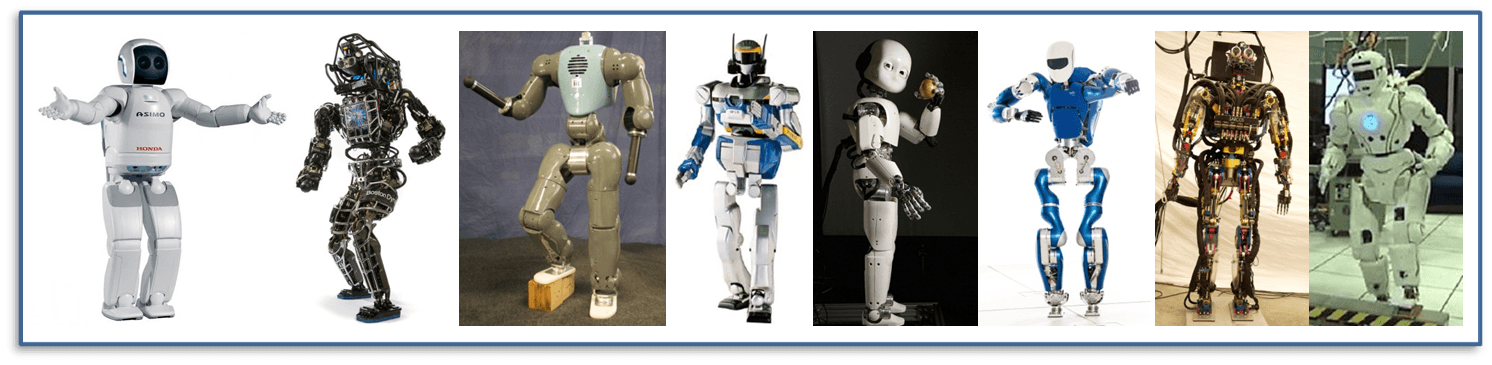
Contributors are invited to discuss their hands-on experience on the Whole-Body Control of real robots. The platforms that are currently being used by the WS invited speakers/organizers in their research consist of 8 different humanoid robots (ASIMO, ATLAS, COMAN, HRP-2, iCub, TORO, Sarcos robot, Valkyrie). This number grows to at least 16 if we also consider robots with which the speakers have had previous research experience. From this list at least 4 will be participants in the DRC, whose finals will take place in 2015.


LIST OF TOPICS:

The focus will be on real experiences in Whole-Body Control with real robots. The WS and SI will cover, but not be limited to, the following topics:

  • Whole-body position/force control
  • Model-based robot dynamics
  • Centroidal momentum
  • Contacts planning and control
  • Torque-control
  • Compliant body behavior
  • Practical tips on whole-body control with real robots
  • Whole-body agile locomotion and dexterous manipulation


IROS14 WORKSHOP:

Schedule:

[08.45 - 09.00] Introduction     PDFicon.png

[09.00 - 09.30] Christian Ott (DLR)

   “Practical Experiences with the Torque-Controlled Humanoid Robot TORO”

[09.30 - 10.00] Yoshihiko Nakamura (Univ. of Tokyo)

  “On Reuse of Human Motion for Robot Control”

[10.00 - 10.30] Patrick M. Wensing and David E. Orin (OSU)

  “Centroidal Dynamics for Whole-Body Humanoid Control”     PDFicon.png

[10.30 - 11.00] Coffee Break

[11.00 - 11.30] Siyuan Feng (CMU)

  "Full-Body Control for the Atlas Robot"     PDFicon.png

[11.30 - 12.00] Federico L. Moro (IIT)

  “An Attractor-based Whole-Body Motion Control (WBMC) System - Tests with the COMAN Robot”     PDFicon.png

[12.00 - 12.30] Russ Tedrake (MIT)

  “Optimization-based estimation, planning, and control”

[12.30 - 13.30] Lunch Break

[13.30 - 14.15] Interactive Session (see below)

[14.15 - 14.45] Andrea Del Prete (LAAS-CNRS)

  "Joint-Torque Control with Electric Motors and Harmonic Drives"     PDFicon.png

[14.45 - 15.15] Silvio Traversaro  (IIT)

  “Whole-body Dynamic Computations on the iCub Humanoid”

[15.15 - 15.45] Coffee Break

[15.45 - 16.15] Luis Sentis (UT Austin)

  “Middleware for Rapid Application Programming”

[16.15 - 16.45] Mitsuharu Morisawa (AIST)

  "Locomotion and Manipulation in Unknown Environment by HRP-2"

[16.45 - 17.15] Ludovic Righetti (MPI)

  “Experiments with Hierarchical Inverse Dynamics Control on a Torque-Controlled Humanoid”

[17.15 - 18.00] Round Table


Interactive Session: 

  • Hongkai Dai (MIT), Andres Valenzuela (MIT), Russ Tedrake (MIT)

“Whole-body Motion Planning with Simple Dynamics and Full Kinematics”     PDFicon.png   PDFicon.png

  • Michele Focchi (IIT), Andrea Del Prete (LAAS-CNRS), Ioannis Havoutis (IIT), Claudio Semini (IIT), Roy Featherstone (IIT), Darwin G. Caldwell (IIT)

“High-slope Terrain Locomotion for Torque-Controlled Quadruped Robots”     PDFicon.png

  • Gerardo Jarquin (IPN), Gustavo Arechavaleta (IPN), Adrien Escande (AIST), Eiichi Yoshida (AIST)

“Time-Constrained Whole Body Control With Smooth Task Transitions”     PDFicon.png   PDFicon.png

  • Jaeheung Park (SNU)

Experimental Results of Whole-body Control Framework on Torque Controlled Humanoid Legged Robot and Dual Arm-Hand Manipulator”     PDFicon.png

  • Alessio Rocchi (IIT), Enrico Mingo Hoffman (IIT), Edoardo Farnioli (IIT), Nikos G. Tsagarakis (IIT)

“A Whole-Body Stack-of-Tasks compliant control for the Humanoid Robot COMAN     PDFicon.png  VideoIcon2.png

  • Jesper Smith (IHMC), Sylvain Bertrand (IHMC), Peter Neuhaus (IHMC), Matthew Johnson (IHMC), Jerry Pratt (IHMC), and the IHMC team

Momentum-based whole-body control framework – Application to the humanoid robots Atlas and Valkyrie”     PDFicon.png   PDFicon.png

  • Wael Suleiman (Univ. of Sherbrooke Quebec)

Inverse Kinematics: New Method for Minimum Jerk Trajectory generation”     PDFicon.png   PDFicon.png

  • Hilario Tome (PAL), Luca Marchionni (PAL), Adolfo Rodriguez Tsouroukdissian (PAL)

Whole body control using Robust & Online hierarchical quadratic optimization”     PDFicon.png  VideoIcon2.png


Call for contributions CALL CLOSED

Perspective contributors are invited to submit an extended abstract (1 to 3 pages) describing their related research. All relevant and distinguished works will be selected and organized in the form of interactive session, or invited to give an oral talk presentation.

Submissions must be in PDF format, and have to be sent to This email address is being protected from spambots. You need JavaScript enabled to view it..


Important dates

Submission deadline: June 15th, 2014 July 15th, 2014

Notification of acceptance: July 15th, 2014 July 31st, 2014

Workshop date: Sept 18th, 2014


IJHR SPECIAL ISSUE:

Call for papers     PDFicon.png

Perspective contributors are invited to submit a full paper on their related research. All papers will undergo the regular IJHR review process.

IJHR Website: http://www.worldscientific.com/page/ijhr/callforpapers-details#Whole-Body%20Control

Authors should follow the guidelines of the International Journal of Humanoid Robotics (IJHR). The format is described at:
http://www.worldscientific.com/page/ijhr/submission-guidelines

Prospective authors should submit an electronic copy of their completed manuscripts through the on-line submission system at:
http://www.editorialmanager.com/ijhr/default.asp?pg=login.asp with the note "This paper is submitted to the Special Issue on Whole-Body Control for Robots in the Real World" according to the submission schedule.


Important dates

Submission deadline: 27th Mar 2015 24th May 2015

To appear in the issue of Dec 2015


FURTHER NOTES

  • A contribution can be either only for the Workshop or for the Special Issue, or (better) for both events.
  • Speakers at either oral or interactive session of the WS will be invited to submit a contribution to the IJHR SI.
  • There is no limitation on the number of contributions from the same author/institution.


Contact: This email address is being protected from spambots. You need JavaScript enabled to view it.


Acknowledgment:

The IROS14 WS & IJHR SI on Whole-Body Control for Robots in the Real World are supported by the IEEE-RAS Technical Committee on Whole-Body Control - http://www.wholebodycontrol.eu/